Expanding into India has become a strategic priority for many businesses across the UK and Europe. As one of the world’s fastest-growing major economies, India offers access to a large consumer market, a highly skilled workforce, competitive operating costs, and a thriving business ecosystem. However, choosing the right business structure is one of the most important decisions for any foreign investor. Among the available options, establishing a wholly owned subsidiary of foreign company in India is widely regarded as the most effective way to build a long-term presence while retaining complete ownership and control.
A wholly owned subsidiary of foreign company in India allows an overseas business to operate through a locally incorporated company that is entirely owned by the foreign parent. This structure provides legal recognition within India, enables independent business operations, and offers greater flexibility than liaison offices or branch offices.
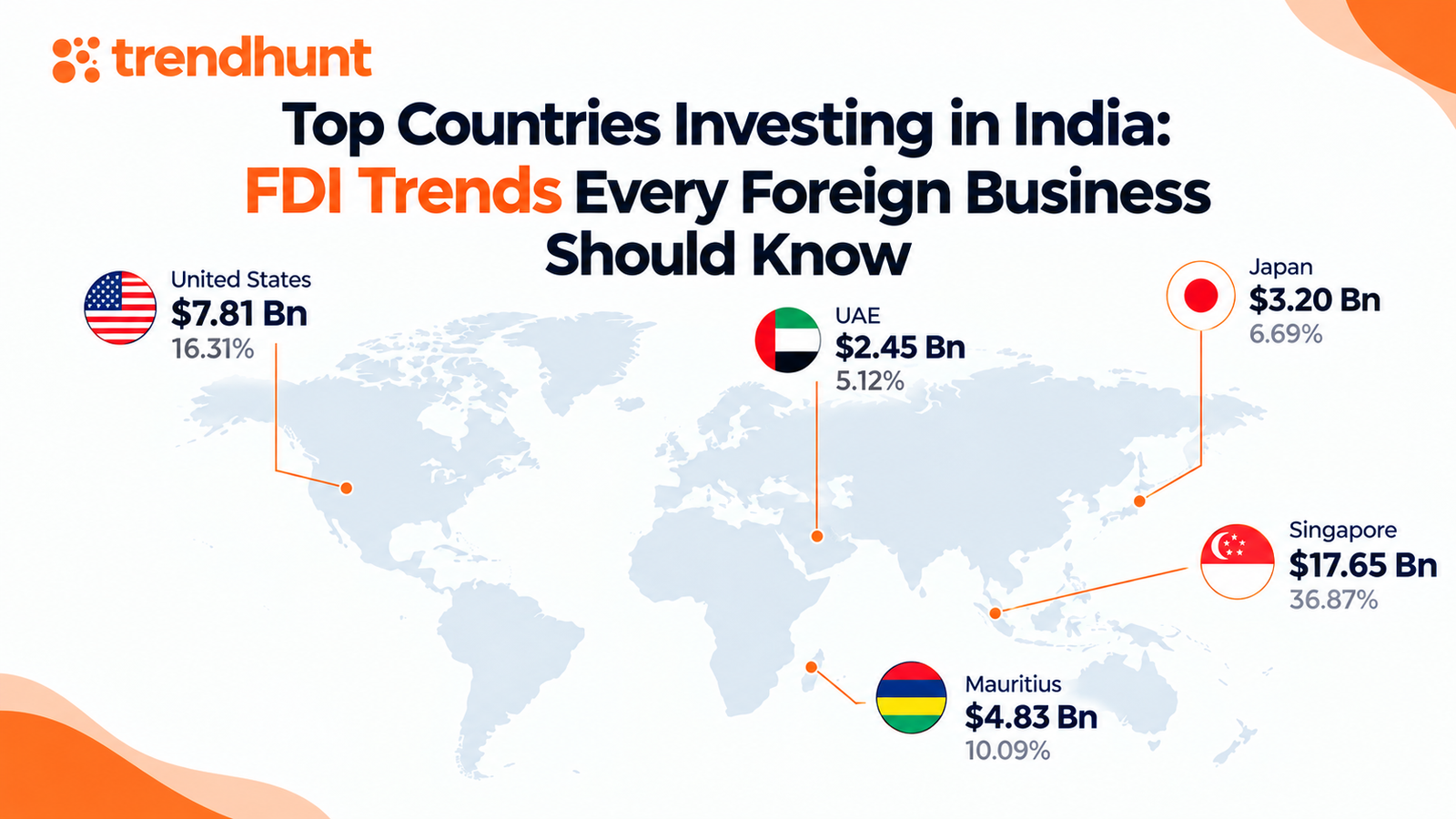
According to the Department for Promotion of Industry and Internal Trade (DPIIT), India has attracted more than USD 1 trillion in cumulative Foreign Direct Investment (FDI) since April 2000. This milestone reflects the growing confidence that global businesses have in India’s economic stability and investment potential.
This guide explains what a wholly owned subsidiary of foreign company in India is, why international businesses choose this model, and what companies should know before starting the incorporation process.
Understanding a Wholly Owned Subsidiary of Foreign Company in India
A wholly owned subsidiary of foreign company in India is an Indian company whose entire shareholding belongs to a foreign parent company. It is incorporated under the Companies Act, 2013, and functions as a separate legal entity despite being fully owned by the overseas organisation.
Because the subsidiary has its own legal identity, it can:
- Conduct commercial operations in India
- Enter into contracts independently
- Open corporate bank accounts
- Employ local and international professionals
- Purchase or lease property
- Own intellectual property
- File taxes under Indian regulations
While the foreign parent company exercises complete ownership and strategic control, the subsidiary remains responsible for complying with Indian corporate and tax laws.
This legal separation is one of the primary reasons why multinational companies prefer this structure for long-term expansion.
Why Foreign Companies Choose This Business Structure
Businesses entering India have several options, including branch offices, liaison offices, project offices, joint ventures, and subsidiaries. However, a wholly owned subsidiary of foreign company in India offers distinct advantages that make it the preferred choice for sustainable growth.
Some of the key benefits include:
Complete Ownership
The foreign parent company retains 100% ownership of the Indian entity in sectors where full foreign investment is permitted. This allows businesses to maintain complete control over operations, management decisions, and long-term business strategy.
Independent Legal Entity
Unlike a branch office, the subsidiary exists as a separate company under Indian law. This enhances credibility among customers, suppliers, financial institutions, and government authorities.
Limited Liability
The parent company’s financial liability is generally limited to its investment in the subsidiary, helping protect the overseas business from operational risks within India.
Local Market Presence
A locally incorporated company builds stronger trust with Indian clients and business partners. Many large organisations and government departments prefer dealing with Indian registered entities rather than overseas suppliers.
Better Hiring Opportunities
A subsidiary can recruit employees directly under Indian employment laws, making it easier to build local teams across sales, technology, finance, manufacturing, consulting, and customer support.
Industries Where This Structure Is Most Popular
A wholly owned subsidiary of foreign company in India is commonly used across multiple industries.
These include:
- Information Technology
- Software Development
- Artificial Intelligence
- Manufacturing
- Automotive Components
- Renewable Energy
- Healthcare Technology
- Business Consulting
- Engineering Services
- Financial Technology
- E-commerce
- Research and Development
Many of these industries allow 100% Foreign Direct Investment through the automatic route, making incorporation simpler for overseas investors.
Eligibility Criteria for Foreign Companies
Before incorporating a wholly owned subsidiary or company register in India, foreign businesses must ensure compliance with Indian corporate laws.
Generally, the company must have:
- A legally incorporated foreign parent company
- Minimum two directors
- At least one resident director in India
- Two shareholders (nominee shareholders where required)
- A registered office address in India
- Certified incorporation documents of the parent company
Depending on the country where the parent company is registered, official documents may require notarisation or apostille certification before submission in India.
Registration Process Explained
The incorporation process has become significantly more streamlined due to digital filing systems introduced by the Ministry of Corporate Affairs (MCA). However, proper documentation remains critical.
| Registration Stage | Purpose |
|---|---|
| Company Name Approval | Reserve a unique business name |
| Digital Signature Certificates (DSC) | Enable electronic document filing |
| Director Identification Number (DIN) | Register company directors |
| Company Incorporation | Form the legal entity under Indian law |
| PAN & TAN Registration | Complete tax registrations |
| Corporate Bank Account | Receive foreign investment funds |
| RBI & FDI Reporting | Comply with foreign investment regulations |
| Industry Licences | Obtain GST and sector-specific approvals where required |
Although many registrations can be completed online, experienced professional guidance often helps avoid delays caused by documentation errors.
Real-Life Case Study
A UK-based cloud software company initially served Indian clients through remote sales from London. As the number of enterprise customers increased, businesses began requesting local contracts, dedicated support teams, and faster implementation services.
To meet these expectations, the company established a wholly owned subsidiary of foreign company in India in Bengaluru. The new entity hired software engineers, customer success managers, and implementation consultants locally.
Within eighteen months, customer onboarding time reduced by nearly 40%, service quality improved significantly, and the Indian operation became one of the company’s fastest-growing business units. The local presence also strengthened customer confidence because contracts were signed directly with an Indian company backed by an established international parent.
Example
Imagine a Dutch cybersecurity company planning to expand across Asia.
Instead of serving Indian customers remotely, the company establishes a wholly owned subsidiary of foreign company in India. The subsidiary recruits local cybersecurity experts, signs contracts with Indian financial institutions, invoices clients domestically, and provides real-time technical support.
This structure enables the company to compete more effectively while maintaining complete ownership and protecting its global business strategy.
Taxation Framework for a Wholly Owned Subsidiary of Foreign Company in India
Once incorporated, a wholly owned subsidiary of foreign company in India is treated as a domestic company under Indian tax law. This means it is taxed on income generated within India, not on global income.
Key tax components include:
- Corporate income tax (as applicable to domestic companies)
- Goods and Services Tax (GST) for supply of goods/services
- Withholding tax on specific payments
- Transfer pricing regulations for transactions with the parent company
India also follows strict transfer pricing rules to ensure that transactions between the subsidiary and its foreign parent are conducted at arm’s length. This is especially important for UK and European companies dealing in services, royalties, or inter-company cost sharing.
Compliance Requirements After Incorporation
Running a subsidiary after setting up a company in India requires strict adherence to ongoing compliance rules. Companies must follow annual and periodic filings to remain compliant with the Ministry of Corporate Affairs (MCA), Income Tax Department, and Reserve Bank of India (RBI).
Key compliance obligations include:
- Annual financial statements filing with ROC
- Income tax return filing every financial year
- GST returns (if registered under GST regime)
- Board meeting documentation (minimum four per year)
- Maintenance of statutory registers
- Annual return filing (MGT-7 or applicable form)
- RBI reporting for foreign direct investment inflows
Non-compliance can lead to penalties, restrictions on operations, and reputational risk for the parent company.
Table: Key Differences Between Subsidiary and Other Entry Modes
| Structure | Ownership | Legal Status | Control | Compliance Level |
|---|---|---|---|---|
| Wholly Owned Subsidiary | 100% Foreign Owned | Separate legal entity | Full control | High |
| Branch Office | Fully controlled by parent | Extension of foreign company | Limited | High |
| Liaison Office | 100% Foreign Owned | Not allowed to earn income | Very limited | Moderate |
| Joint Venture | Shared ownership | Separate legal entity | Shared control | High |
This comparison highlights why a wholly owned subsidiary of foreign company in India is often preferred for long-term strategic expansion.
Cost of Setting Up a Wholly Owned Subsidiary of Foreign Company in India
The cost of incorporation depends on several factors such as professional fees, government charges, office setup, and compliance requirements.
Typical cost components include:
- Government incorporation fees
- Digital signature certificates
- Legal and professional advisory fees
- Notarisation and apostille charges (if applicable)
- Registered office setup costs
- Accounting and compliance setup
While initial costs may vary, India remains significantly more cost-efficient compared to many Western markets for business setup and operational scaling.
Common Challenges Foreign Companies Face
Although India offers a business-friendly environment, companies may still face challenges when establishing a wholly owned subsidiary of foreign company in India.
1. Documentation Delays
Improper notarisation or incomplete documentation from the parent company can slow down incorporation.
2. Regulatory Complexity
Understanding sector-specific FDI rules and approvals can be complex for first-time investors.
3. Compliance Burden
Ongoing compliance requirements are strict and must be followed consistently.
4. Banking and Fund Transfers
Opening corporate accounts and managing cross-border fund transfers may require additional documentation and RBI reporting.
These challenges are manageable with proper planning and experienced advisory support.
Strategic Importance of a Wholly Owned Subsidiary in India
A wholly owned subsidiary of foreign company in India is not just a legal structure—it is a long-term strategic investment. It allows companies to:
- Establish a strong regional headquarters for Asia
- Improve customer trust and engagement
- Access India’s engineering and technology talent pool
- Scale operations efficiently across multiple cities
- Build intellectual property and innovation centers
For UK and European companies, India often becomes a critical hub for outsourcing, R&D, and customer operations.
Example: Scaling Operations Through a Subsidiary
A German industrial automation company initially supplied machinery to Indian manufacturers through distributors. However, after establishing a wholly owned subsidiary of foreign company in India, the company began offering direct installation, maintenance, and training services.
Within two years, the subsidiary not only improved customer satisfaction but also increased revenue by securing long-term service contracts that were previously inaccessible through third-party channels.
Why Stratrich Is a Trusted Partner for Foreign Companies
Setting up and managing a wholly owned subsidiary of foreign company in India requires expertise in corporate law, taxation, accounting, and regulatory compliance.
Stratrich supports UK and European businesses through:
- Company incorporation in India
- FDI advisory and RBI compliance
- Tax registration and structuring
- Accounting and bookkeeping services
- Payroll and HR compliance
- Annual return and ROC filings
- Ongoing business advisory
With structured support, international companies can focus on expansion while ensuring full regulatory compliance in India.
Conclusion
A wholly owned subsidiary of foreign company in India is one of the most effective ways for international businesses to enter and grow in the Indian market. It provides complete ownership, operational independence, legal protection, and access to one of the world’s fastest-growing economies.
While the setup and compliance process requires careful planning, the long-term benefits far outweigh the initial effort. For UK and European companies, India offers not just a market, but a strategic growth platform for global expansion.
With the right guidance from experienced advisors like Stratrich, foreign businesses can establish, operate, and scale their Indian subsidiary with confidence and long-term success.